Title
Excerpt
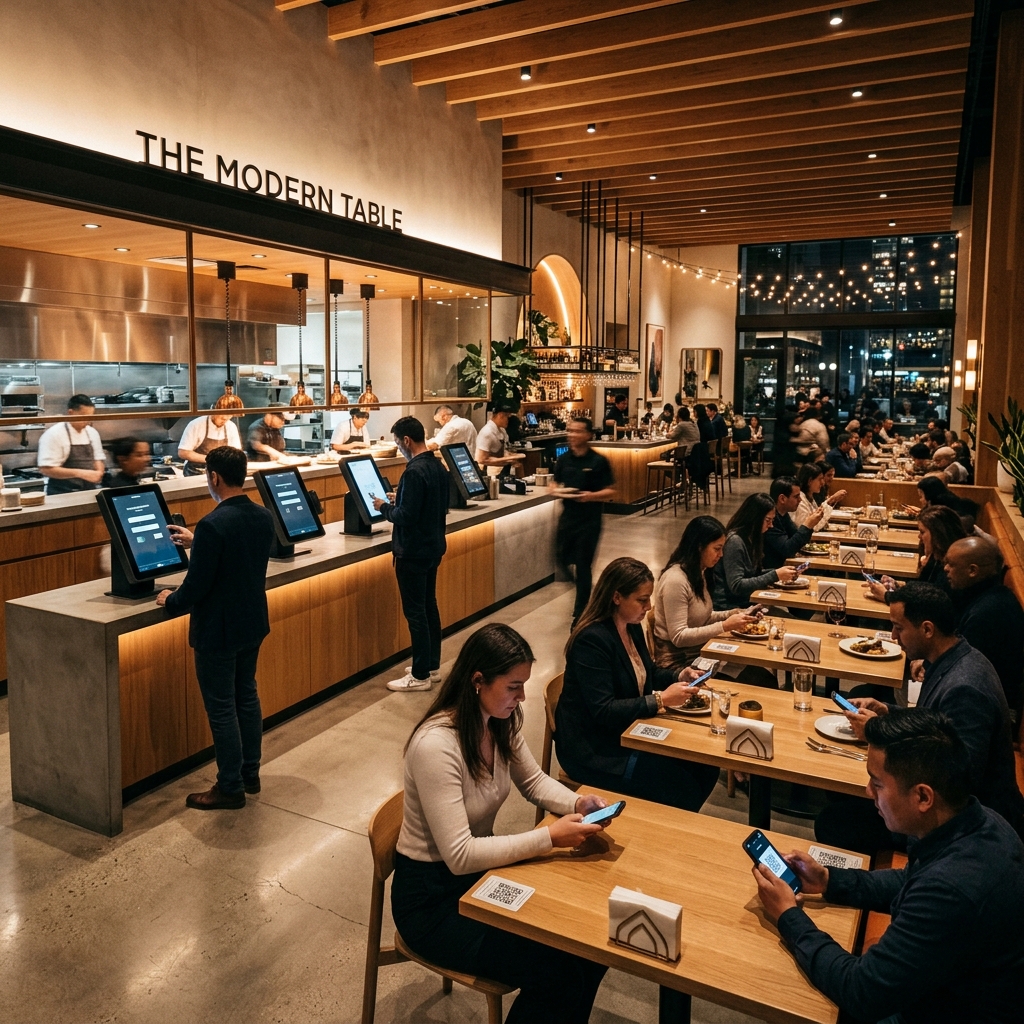
The restaurant labour crisis is not a temporary blip; it is a structural shift. Hiring is harder, wages are rising, turnover is punishing, and the traditional model — throw more bodies at the problem during a rush — no longer works when there are no bodies to throw. This article takes a clear-eyed look at what is actually driving the staffing crunch, why the answer is not "replace people with robots," and how thoughtful automation redesigns work so a smaller, better-paid, less-stressed team can run a great restaurant.
Understanding the crisis honestly
It is easy to reduce the staffing crisis to "nobody wants to work anymore," but that explanation is both wrong and useless. The real drivers are structural and mutually reinforcing:
- Demographic and participation shifts. Fewer people are entering hospitality as a long-term career, and many who left during industry shocks did not return.
- Wage pressure. Competition for workers and rising minimum wages have pushed labour costs up, squeezing already-thin margins.
- Brutal turnover. Hospitality has long suffered high churn, and every departure carries real recruiting, onboarding, and lost-productivity costs.
- Burnout. Understaffed shifts overload the people who remain, which drives more of them out — a vicious cycle.
- Rising expectations. Customers expect speed, accuracy, and digital convenience, adding tasks to an already stretched team.
Notice that these feed each other. Understaffing causes burnout, which causes turnover, which worsens understaffing. Any solution has to break the cycle, not just paper over one symptom.
The wrong mental model: automation as replacement
The unhelpful framing is "automate to eliminate staff." Hospitality is, at its core, a human business — people come for the food, the atmosphere, and the feeling of being looked after. Stripping out the humans that create that feeling is a fast route to a worse restaurant. The goal is not fewer humans doing the same jobs badly; it is humans freed from low-value, repetitive, error-prone tasks so they can spend their time where humans are irreplaceable.
The right question is not "which staff can I remove?" but "which tasks are burning out my staff without adding value — and can a machine do those instead?"
Where automation genuinely helps
Automation earns its place when it removes drudgery, reduces errors, or absorbs peak-load pressure. In a restaurant, that points to a specific set of tasks.
Order taking and payment
Manually taking every order and processing every payment is enormous, repetitive labour, and it is exactly the work that piles up during a rush. QR and self-service ordering let customers who want to self-serve do so, while staff focus on tables that want attention. Crucially, this is capacity that scales instantly at peak: twenty tables can order simultaneously without twenty interactions from a server. The order flows straight to the kitchen with no re-keying and no misheard modifiers.
Kitchen coordination
A kitchen display system replaces the shouted-order-and-paper-ticket chaos with clear, timed, routed tickets. It reduces the cognitive load on the expeditor, prevents forgotten tickets, coordinates courses, and surfaces timing data. That is less stress and fewer errors without removing a single cook — the humans still cook; the system just organises the flow.
The back office
A huge amount of managerial time disappears into administrative tasks that create no customer value: reconciling sales, compiling reports, calculating taxes, tracking inventory, and preparing figures for accountants. Automating these frees managers to do the things that actually retain staff and grow revenue — coaching, floor presence, and hospitality. Every hour a manager does not spend on a spreadsheet is an hour they can spend developing their team.
Forecasting and scheduling
Poor scheduling is a hidden driver of both cost and burnout: overstaff and you waste labour, understaff and you crush the team and the customer experience. Demand forecasting based on historical sales, day of week, weather, and local events lets managers schedule to actual expected demand rather than gut feel — matching labour to need so shifts are neither wasteful nor brutal.
How automation attacks the vicious cycle
Trace the effects through the cycle described earlier. When repetitive tasks are automated, each shift is less overwhelming, which reduces burnout. Lower burnout reduces turnover. Lower turnover reduces the constant cost and disruption of hiring and training, and it preserves the experienced staff who make service excellent. Meanwhile, accurate forecasting prevents the understaffing that started the spiral. Automation, applied to the right tasks, is less about doing more with fewer people and more about making the jobs sustainable so people stay.
Retention is the highest-leverage metric in hospitality. The cheapest, best-trained employee you will ever have is the one you already have — automation that keeps them from burning out pays for itself many times over.
The economics of turnover
Consider a clearly illustrative example of why retention matters so much. Suppose replacing one front-line employee costs the equivalent of several weeks of their wages once you count recruiting, onboarding, training time, mistakes during ramp-up, and the productivity lost while short-staffed. A restaurant that cuts its annual turnover meaningfully recovers a substantial sum and, just as importantly, keeps the institutional knowledge that makes service smooth. Automation that reduces the daily grind is, in effect, a retention investment.
The labour math every operator should know
Labour is typically one of a restaurant's two largest controllable costs, alongside food. Operators track a labour-cost percentage — total labour cost divided by revenue — and manage it carefully, because a few points in either direction is the gap between profit and loss. The tension is that cutting labour too far damages service and speed, while overstaffing burns margin. Automation reframes this tension: instead of choosing between "understaffed and stressed" or "overstaffed and unprofitable," you reduce the amount of labour a given level of service requires, so the same team covers more without being crushed.
Consider an illustrative example of the leverage involved. Suppose self-service ordering lets each server comfortably handle more tables during peak because they are no longer walking every order to the kitchen and every bill to the table. If a server who previously covered a certain section can now cover more without a drop in service quality, you have increased revenue capacity per labour hour — which improves the labour-cost percentage without cutting anyone's hours or pay. That is the healthy version of efficiency: more output per hour, not fewer humans doing degraded work.
Forecasting and scheduling: the highest-leverage automation
Of all the places automation helps, scheduling is arguably the highest-leverage and the most neglected. Manual scheduling tends to repeat last week's pattern, which is almost never optimal. Demand-based scheduling instead builds the roster around a forecast of expected demand, so labour is matched to need shift by shift and even hour by hour.
A good forecast draws on several signals:
- Historical sales by day, daypart, and season — the baseline pattern of your business.
- Day-of-week and holiday effects — a Friday is not a Tuesday, and a public holiday is neither.
- Weather — which meaningfully shifts demand for many concepts, especially those with outdoor seating or delivery.
- Local events — a concert, a match, or a conference nearby can transform a night.
When the schedule is built on this rather than habit, two things improve at once: you stop overstaffing quiet periods (saving cost) and you stop understaffing busy ones (saving your team from the burnout that drives turnover). Scheduling is where cost control and staff wellbeing align rather than conflict — which is why it deserves attention before flashier automations.
Automating onboarding and training
High turnover means constant onboarding, and onboarding is expensive precisely because it consumes experienced staff's time and produces low output while a new hire ramps. Automation and good systems reduce this cost in two ways. First, intuitive tools that run on familiar devices are simply faster to learn — a new server who already understands a smartphone learns a phone-based POS in minutes, not shifts. Second, digitising standard procedures, recipes, and training materials means a new hire can self-serve much of their ramp-up rather than shadowing a senior staff member for every detail. The result is a shorter, cheaper, more consistent onboarding — which matters enormously when turnover is high and every reduction in ramp time compounds across every hire.
Cross-training and flexible labour
Automation pairs naturally with two organisational strategies that also fight the staffing crunch. Cross-training — equipping staff to move between roles as demand shifts — is far easier when systems are unified and simple to learn, because the barrier to a server helping expedite or a host taking orders drops. And flexible or part-time labour, increasingly common in hospitality, integrates more smoothly when the tools are intuitive enough that an occasional worker can be productive quickly. Both strategies increase the resilience of a small team, and both are enabled by the same simplicity that makes automation adoptable.
Kiosks, QR, and staff: choosing the right mix
Self-service comes in several forms, and the right mix depends on the concept. Fixed kiosks suit high-throughput counter-service formats where a queue forms at a defined point. QR ordering suits table service and any situation where the customer is seated or dispersed, because it needs no dedicated hardware and scales to as many customers as have phones. Staff-taken orders remain essential wherever hospitality, upselling, or a personal touch drives the experience. The goal is not to pick one but to combine them so the repetitive, high-volume ordering is absorbed by self-service while staff are freed for the interactions that actually need a human. Crucially, self-service should always be an option the customer can choose, not a wall they are forced through.
Measuring whether automation is working
Like any investment, staffing automation should be judged on outcomes, not enthusiasm. The metrics that matter:
- Turnover rate. The single most important number; a falling turnover rate signals that jobs have become more sustainable.
- Labour cost as a percentage of revenue. Should improve as capacity per labour hour rises — ideally without cutting pay.
- Sales per labour hour. A direct read on productivity.
- Speed of service and order accuracy. These should hold or improve; if they degrade, you have automated the wrong thing or automated badly.
- Staff satisfaction. Harder to quantify but visible in retention, absenteeism, and the tone on the floor.
Redesigning roles, not just adding tools
Automation only delivers if you redesign work around it. Bolting a QR code onto an unchanged workflow just adds confusion. The operators who benefit most rethink roles:
- Servers become hosts. Freed from ferrying orders and payments, they focus on recommendations, atmosphere, and problem-solving — the parts of service that build loyalty.
- Managers become coaches. With reporting and compliance automated, managers spend time on the floor developing people rather than buried in admin.
- Kitchens run on rhythm, not adrenaline. A KDS turns frantic improvisation into a paced, visible flow.
This redesign is also a recruiting and retention advantage. A job that is less about drudgery and more about craft and hospitality is simply a better job — and better jobs attract and keep better people.
Implementation without alienating your team
Introducing automation badly can backfire, making staff feel surveilled or threatened. A humane rollout matters:
- Frame it as relief, not replacement. Be explicit that the goal is to remove the worst parts of the job, and involve staff in identifying those parts.
- Automate the tasks people hate first. Reconciliation, tip-outs, repetitive reporting — win trust by removing pain, not by cutting hours.
- Train properly. New tools that are poorly explained create stress; good onboarding makes them feel like an upgrade.
- Keep the human option open. Self-service should be a choice for customers and staff, not a forced substitution.
- Share the gains. If automation improves margins, reinvesting some of that in wages or conditions closes the loop and reinforces retention.
Where Nigmet fits
Nigmet is an AI-native restaurant operating system designed to take repetitive load off people. QR and self-service ordering absorb peak-time order-taking so staff can focus on hospitality; the kitchen display system organises and paces the line; and the back office — sales reconciliation, reporting, and fiscal compliance — is automated because payments, ordering, and compliance are one platform rather than separate tools. Sales data feeds forecasting that helps managers schedule to real demand. The intent is not to shrink teams but to make each shift sustainable, cut the drudgery that drives turnover, and let a smaller, steadier, better-supported team run a genuinely good restaurant.
The bottom line
The staffing crisis is structural, and the businesses that survive it will be the ones that stop trying to out-hire a shrinking labour pool and start redesigning work so it is sustainable. Automation is the tool for that redesign — not to replace the humans who make hospitality worth experiencing, but to strip away the repetitive, error-prone, burnout-inducing tasks that were never the point. Automate order-taking at peak, coordinate the kitchen, clear the back-office backlog, and forecast demand honestly, and you break the burnout-turnover cycle. The prize is a team that stays, a job worth doing, and a restaurant that runs on rhythm instead of adrenaline.
Build a restaurant your team can sustain. See how automation is bundled across our plans on the pricing page.